

PORTLAND, OR — In an effort to balance civic expression with the city’s long-running war against noise complaints, Portland officials have launched a pilot program encouraging residents to participate in “silent protests,” a new form of demonstration that relies entirely on posture, eye contact, and sustained disappointment.
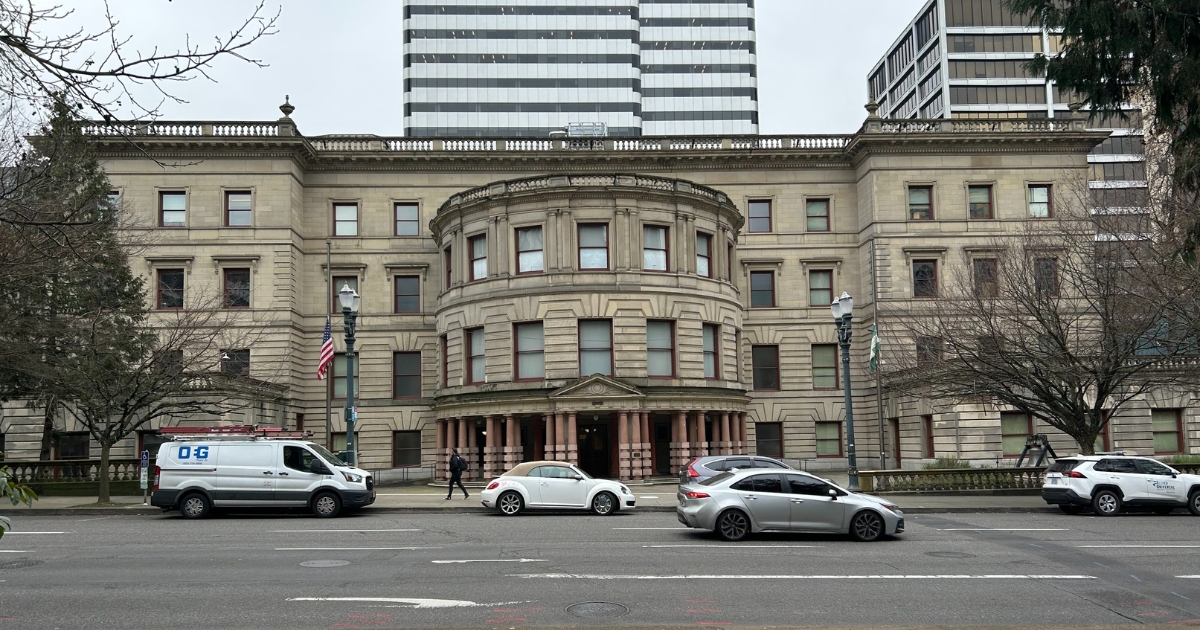
The initiative was unveiled this week outside Portland City Hall, where dozens of participants stood motionless, holding blank cardboard signs and staring calmly at the building for nearly an hour. No chants were heard. No megaphones appeared. Several pigeons seemed unsettled.
According to city officials, the goal is to preserve Portland’s protest culture while respecting the acoustic sensitivities of nearby neighborhoods, home offices, and at least one yoga studio.
Protest Without the Disturbance
Under the new guidelines, silent protests allow residents to express dissatisfaction without generating sound levels that might trigger complaints, alerts, or passive-aggressive emails to neighborhood listservs.
Participants are instructed to:
- Stand still or shift weight thoughtfully
- Maintain a neutral-to-disappointed facial expression
- Make prolonged eye contact with nearby buildings
- Avoid sighing audibly
“Silence can be incredibly powerful,” said one city spokesperson. “Especially when paired with visible disapproval.”
Printed materials for the program emphasize that silence should feel intentional, not confused.
Jason Reed Explains the Concept at Length
City Council member Jason Reed, who helped champion the initiative, addressed the media during the pilot while standing slightly apart from the silent protesters, speaking continuously for nearly 14 minutes.
“What we’re talking about here,” Reed said, gesturing broadly, “is a recalibration of civic expression within an evolving urban soundscape, one that respects both the emotional urgency of protest and the very real fact that some people are on Zoom calls.”
Reed, known around City Hall for his verbose explanations, continued outlining the philosophical roots of silent protest, referencing urban planning theory, mindfulness practices, and a personal anecdote involving a loud demonstration and an underwhelming oat milk latte.
“This isn’t about muting voices,” he added. “It’s about amplifying presence.”
Reed later clarified that participants are still encouraged to feel intensely, just quietly.
Neighborhood Reactions Vary Subtly
In Downtown Portland, office workers paused briefly to watch the protesters, then returned to their desks feeling vaguely judged.
Residents in Goose Hollow praised the effort, noting that the protest produced “a strong emotional ambiance without the yelling.”
Over in North Portland, some locals expressed concern that the silence made it harder to tell what people were protesting.
“I couldn’t tell if they were mad about housing, transit, or brunch,” said one passerby. “But I knew they were disappointed.”
City officials confirmed that ambiguity is considered a feature, not a flaw.
Training Protesters to Be Quiet Effectively
As part of the pilot, the city offered optional workshops titled Effective Stillness and Nonverbal Accountability in Public Spaces.
The sessions covered:
- Proper stance for moral authority
- When blinking becomes distracting
- The difference between reflective silence and awkward silence
- Appropriate footwear for standing in place
Participants were also advised to hydrate beforehand to minimize involuntary noises.
One attendee described the training as “surprisingly intense.”
Law Enforcement Adjusts Accordingly
Portland police confirmed they are adapting their approach to silent protests by monitoring posture rather than volume.
“If no one’s shouting, we just kind of… observe,” said a department representative. “Mostly we try not to interrupt the mood.”
Officers are instructed not to interpret silence as compliance or agreement, but also not to ask protesters what they want unless spoken to first.
Critics Say the City Is Missing the Point
Some activists argue the program risks sanitizing dissent.
A small group attempted a counter-protest nearby by whispering slogans, but the effort quickly dissolved after participants disagreed on acceptable whisper volume.
Jason Reed addressed these concerns later in the day with another extended statement.
“Change doesn’t always have to be loud,” he said. “Sometimes it just has to be present, sustained, and deeply uncomfortable to stand near.”
Witnesses reported that several people drifted away mid-sentence.
Officials Call the Pilot a Success
Despite mixed reactions, city officials labeled the first silent protest a success, citing zero noise complaints, minimal disruption, and “high levels of ambient tension.”
Preliminary data shows nearby residents felt:
- Mildly unsettled
- Quietly judged
- Unsure if they had done something wrong
Plans are underway to expand the program to other civic actions, including silent marches, noiseless rallies, and a potential silent town hall where questions are asked through eye contact.
For now, the city says it will continue evaluating the pilot while encouraging residents to express themselves responsibly.
As one flyer distributed at the event read:
“We hear you. Even if we can’t.”