

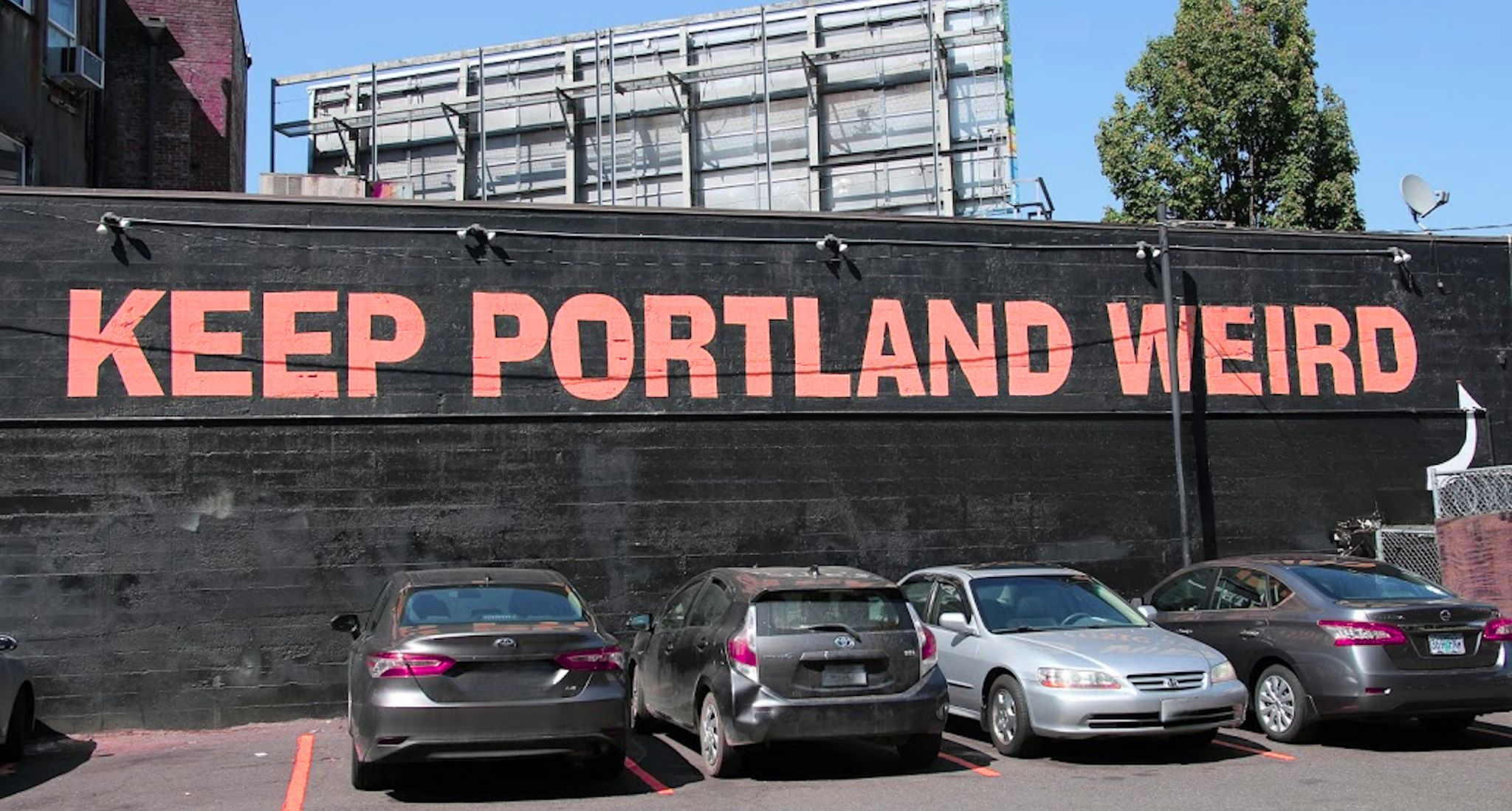
PORTLAND, OR — In an effort to preserve what officials called “the city’s core brand identity,” the City of Portland this week released a 72-page document clarifying what it officially means to “Stay Weird”
The guideline, titled Staying Weird: A Framework for Authentic Individual Expression, was unveiled during a lightly attended press conference at City Hall, where copies were placed carefully next to reusable water bottles and unread zoning updates.
According to city leaders, the document is meant to “support residents in expressing themselves creatively without accidentally becoming problematic, mainstream, or difficult to categorize.”
Defining Weird, For Consistency
For years, “Keep Portland Weird” has served as both a slogan and a vague expectation. City officials say the lack of structure has led to confusion, misinterpretation, and what one spokesperson called “unregulated eccentricity.”
“We realized people were being weird in very different ways,” said a representative from the Office of Civic Identity. “Some of it was charming. Some of it was just loud.”
The new guideline introduces a three-tier classification system:
- Encouraged Weirdness
- Acceptable Weirdness
- Weirdness Subject to Review
Each category includes detailed explanations, examples, and flowcharts.
What’s Officially Encouraged
The guide lists several behaviors the city actively supports, describing them as “low-impact, culturally aligned weirdness.”
Examples include:
- Owning at least one unfinished creative project
- Wearing layers that suggest preparedness for multiple emotional states
- Casually mentioning fermentation without explaining it
- Riding a bike for reasons unrelated to speed
Residents engaging in these behaviors are described as “contributing positively to the city’s texture.”
One section praises “quiet weirdness,” noting that “not all individuality needs to announce itself.”
Acceptable, But Please Be Mindful
The Acceptable Weirdness section spans the largest portion of the document and includes behaviors that are allowed but may require situational awareness.
This category covers:
- Interpretive dance in public spaces (non-peak hours only)
- Naming plants and referring to them as roommates
- Explaining ethical consumption unprompted (once per interaction)
- Wearing statement clothing that requires context
“These are fine,” the guide notes, “but should be practiced with restraint.”
A sidebar encourages residents to “check the room” before escalating.
Weirdness That Requires Review
The most discussed portion of the document is Section 4: Weirdness Subject to Review, which outlines behaviors that may prompt community feedback or quiet concern.
Listed examples include:
- Starting conversations with “I don’t really believe in time”
- Aggressively redefining common words
- Turning every disagreement into a personal growth opportunity
- Launching a lifestyle brand without a clear explanation
While not banned, these behaviors may trigger what the city calls a Reflective Pause, described as “a moment to consider impact.”
A Review Process, Lightly Defined
If a resident’s weirdness is flagged, the guideline suggests informal steps before any escalation.
These include:
- Self-reflection
- Peer feedback
- Temporary reduction in public expression
The city stressed that enforcement is “largely internal.”
“No one is coming for you,” said an official. “We just want people to be aware.”
Neighborhood-Specific Notes
Acknowledging Portland’s diverse neighborhoods, the guide includes a section on Contextual Weirdness, noting that behavior appropriate in SE Portland may be interpreted differently in NW, Alberta, or near Forest Park.
For example:
- Barefoot grocery shopping is “conditionally acceptable” east of the river
- Spoken-word poetry at bus stops should be limited downtown
- Extended eye contact varies by neighborhood
A map is included, though it contains several footnotes.
Public Reaction: Carefully Positive
Reaction across Portland has been measured.
Some residents welcomed the clarity.
“I’ve been anxious about whether I’m weird enough,” said one Pearl District resident. “Now I know I’m safely within Acceptable.”
Others expressed concern that codifying weirdness could undermine its spirit.
“Once you define it, doesn’t it stop being weird?” asked a man adjusting a scarf indoors.
City officials responded by noting the guideline is a “living document” and may be updated annually.
Not Mandatory, But Strongly Suggested
Officials emphasized that compliance is voluntary, though residents are “encouraged to familiarize themselves with the framework.”
Printed copies are available at libraries, community centers, and select coffee shops. A digital version includes hyperlinks, FAQs, and a short quiz titled How Weird Are You, Really?
The final page of the document features a reminder in bold text:
“Weirdness works best when shared responsibly.”
For now, the city says the guideline represents a step toward balance.
“We’re not trying to change Portland,” an official said. “We’re just trying to keep it recognizable.”