

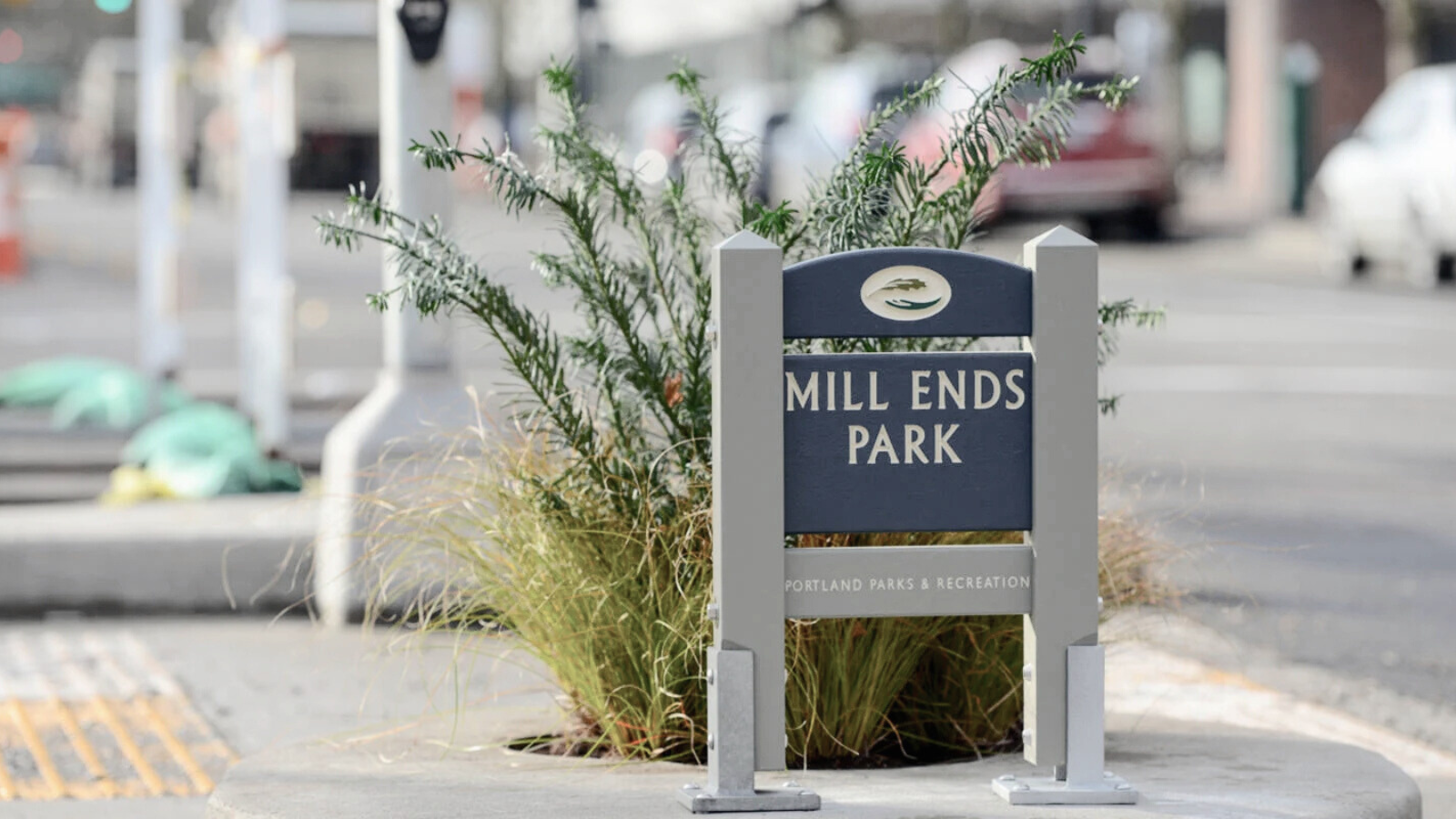
PORTLAND, OR — Mill Ends Park sits in downtown Portland at the unassuming intersection of SW Naito Parkway and SW Taylor Street, occupying a former traffic median that most cities would classify as “an accident.” At just 452 square inches, the park is officially recognized as the smallest park in the world, a title Portland continues to defend with the kind of civic pride normally reserved for bridges and artisanal coffee.
Now, according to city sources, officials are reviewing an initiative that would reduce the park’s footprint even further, citing “spatial optimization” and “unused square inches.”
Yes. Unused.
A Park Roughly the Size of a Pizza Regret
To put Mill Ends Park into perspective, it is approximately:
- Slightly smaller than a standard welcome mat
- Roughly equal to two unfolded newspapers having an argument
- About the same surface area as one Portlander’s sense of personal space on public transit
Urban planners insist that while the reduction would be minimal—measured in fractions of inches—it could “improve sidewalk flow” and “streamline curb efficiency,” phrases which here mean absolutely nothing.
Prime Real Estate Between Two Lanes of Reality
The park’s location is both iconic and confusing. Nestled between lanes of traffic, Mill Ends Park functions as a botanical speed bump. Tourists often walk past it unaware they’ve already seen it, while locals occasionally stop to check whether it’s still there.
City officials say the location makes it “underutilized,” though critics argue that standing inside the park for more than three seconds already feels excessive.
Leprechaun Opposition Led by Patrick O’Toole
Any discussion of Mill Ends Park is incomplete without mentioning Patrick O’Toole, the park’s long-rumored resident leprechaun and self-appointed groundskeeper. According to local lore, O’Toole has already voiced opposition to the proposal, allegedly stating that the park is “perfectly sized for reflection, solitude, and extremely small picnics.”
Sources close to O’Toole claim he is particularly concerned about losing space designated for:
- Sitting
- Standing
- Existing
“He’s worried this sets a dangerous precedent,” said one city employee, speaking anonymously. “First they shrink the park. Next thing you know, the tree has to share its soil.”
City Officials Say ‘No Final Decision Yet’
A spokesperson for the city emphasized that no final decision has been made, and that any change would involve “community input,” potentially gathered from residents who can successfully locate the park without assistance.
Public feedback sessions are expected to include scaled diagrams, magnifying glasses, and at least one heated debate over whether removing a single pebble constitutes displacement.
A Park Defined by Its Refusal to Be Practical
Mill Ends Park has survived decades not because it makes sense, but because it doesn’t. Shrinking it further risks turning it into something dangerously close to conceptual art—something Portland already has plenty of.
For now, the park remains intact, quietly defying scale, logic, and traffic patterns. But if the proposal moves forward, the city may soon face its most delicate urban planning challenge yet: deciding how small is too Portland.