

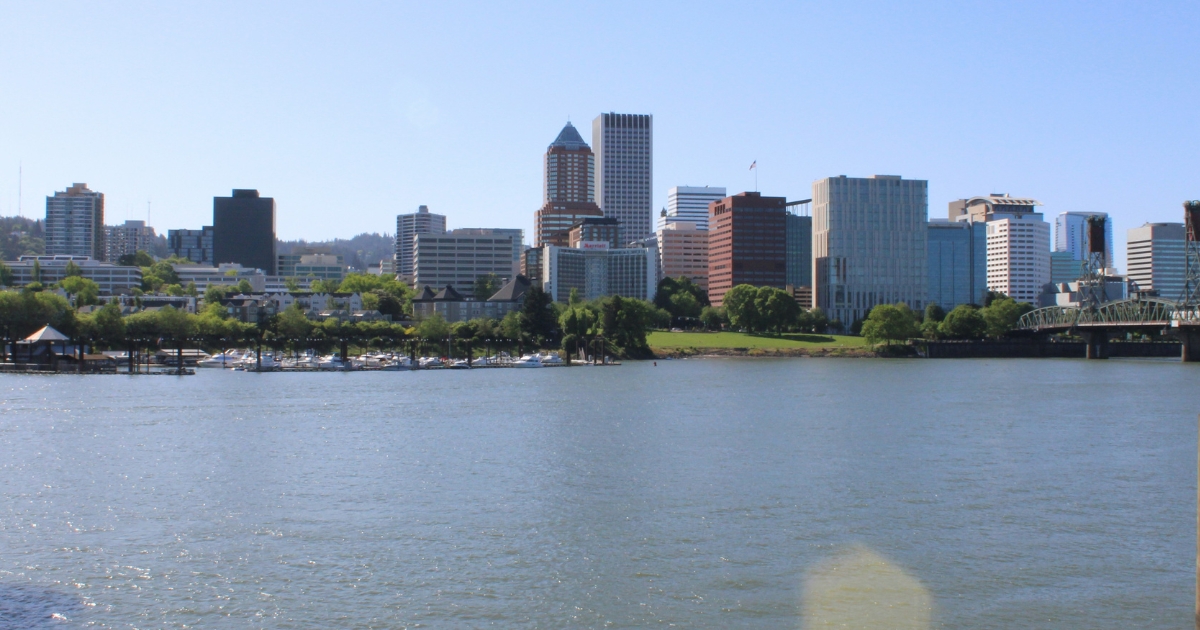
PORTLAND, OR — The City of Portland this week unveiled a new sustainability program designed to address what officials described as the city’s “accumulated emotional footprint,” confirming that future municipal planning will now account for feelings as well as emissions.
The initiative, formally titled Carbon-Neutral Sadness, aims to offset emotional damage caused by daily urban life through environmentally responsible coping mechanisms. City leaders say the program aligns Portland’s climate goals with its long-standing commitment to processing things publicly.
“This isn’t about eliminating sadness,” a spokesperson explained. “It’s about making sure it’s responsibly sourced and fully offset.”
Measuring Feelings, Responsibly
According to city documents, emotional damage will now be measured using a new unit called the Mood Equivalent Ton (MET), calculated based on exposure to construction noise, rent increases, weather ambiguity, and passive-aggressive neighborhood emails.
Preliminary studies suggest the average Portland resident produces approximately 3.7 METs per week, spiking significantly during late winter, early spring, and any time someone asks, “So what do you do?”
Rather than reducing the causes directly, the city’s plan focuses on mitigation. For every unit of emotional damage generated, the city will fund restorative experiences including additional bike lanes, temporary murals, and sanctioned moments of quiet reflection near busy intersections.
How the Program Works
Residents are not required to sign up, though participation is automatic. Emotional damage will be offset citywide through a combination of green infrastructure and symbolic gestures.
Key components include:
- Emotional Buffer Zones along SE Division and NE Broadway, where residents may stand quietly without being approached
- Native Plant Apologies, installed in areas affected by long-term construction
- Feelings Offsets, allowing developers to fund community sighing spaces in exchange for density bonuses
Officials emphasized that no one is expected to feel better immediately. “This is a long-term emotional investment,” said one planner. “Like composting, but internal.”
Neighborhood Rollout Begins
Pilot programs are already underway in several neighborhoods. In the Pearl District, residents reported the installation of new benches specifically designed for staring into the middle distance. In Sellwood, city crews planted trees labeled with phrases like “It’s okay to be tired” and “You’re doing enough.”
Along Hawthorne Boulevard, a pop-up Emotional Processing Lane briefly replaced street parking, allowing drivers to pull over and acknowledge how the day was actually going.
“I didn’t realize how much I was holding in,” said one resident, who spent seven minutes leaning against a traffic sign before continuing on.
City Hall Responds to Concerns
Critics have questioned whether the initiative addresses root causes or simply reframes them aesthetically. City officials acknowledged the concern and responded by forming a subcommittee to explore the concept of “root causes” more gently.
“We hear the feedback,” said a council representative. “And we’re sitting with it.”
Officials stressed that Carbon-Neutral Sadness is not meant to replace existing mental health resources, but rather to complement them by making discomfort feel municipally recognized.
“This is about visibility,” the spokesperson added. “Your emotional damage matters, and it’s now part of our climate strategy.”
Businesses Asked to Participate
Local businesses are encouraged to align with the initiative by offering low-impact emotional experiences. Suggested actions include dimmer lighting, menus with fewer adjectives, and staff acknowledging customers without requiring conversation.
Several cafés have already introduced “neutral seating,” where patrons are neither rushed nor engaged. One shop on Mississippi Avenue now offers a drink option simply labeled “Whatever You Need.”
“It’s our most popular item,” the owner confirmed.
Residents React With Cautious Acceptance
Public reaction has been mixed but thoughtful. Some residents expressed relief that the city is finally acknowledging the cumulative weight of existing in Portland. Others worried the program might formalize feelings they were still negotiating privately.
“I like that it’s carbon-neutral,” said a resident in North Portland. “I just don’t know where my sadness goes after it’s offset.”
City officials clarified that emotional offsets are symbolic and should not be tracked individually. “This is a shared experience,” they said. “Please don’t try to optimize it.”
Looking Ahead
The city plans to release quarterly Emotional Impact Reports, though officials cautioned the findings may be “directional rather than actionable.” A public feedback portal is also planned, pending emotional readiness.
As Portland continues to balance growth, climate responsibility, and the collective mood, leaders insist the initiative represents progress.
“This city has always cared deeply,” the spokesperson said. “We’re just learning how to recycle that.”