

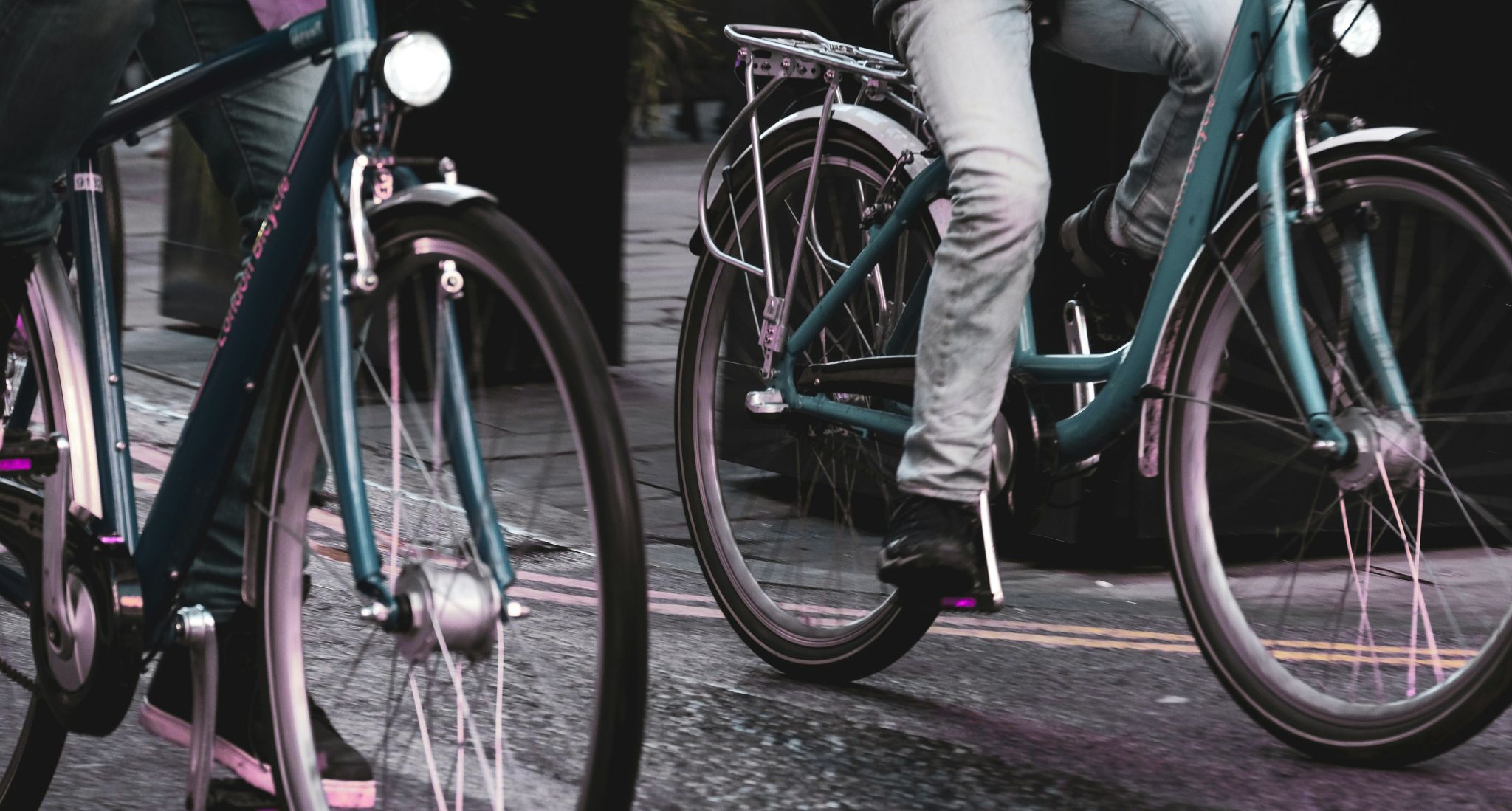
PORTLAND, OR — In Portland, a small, everyday moment is getting more attention than you’d expect.
It starts simply enough: a stop sign, a crosswalk, or just two people arriving at the same place at the same time. One of them is on a bike. There’s a glance. Eye contact happens.
And suddenly, it feels like something needs to be decided.
🚲 A Split-Second That Feels Longer
Residents say the interaction itself is brief, but oddly loaded.
“You make eye contact and immediately feel like you’re supposed to acknowledge it,” one local said. “I just never know how.”
What makes it unusual is that nothing explicitly happens — no words, no signals — but both people seem aware that something just passed between them.
🚦 Where It Gets Complicated: 4-Way Stops
The situation becomes more noticeable at four-way stops, where uncertainty is already built in.
Drivers, pedestrians, and cyclists all arrive with slightly different expectations. Add eye contact to that mix, and the moment can stretch longer than it should.
“We both waved each other through,” another resident said. “More than once. At some point we just stayed there.”
These exchanges rarely escalate into conflict. If anything, they tend to stall — quietly — until someone commits.
😐 The Unwritten Rules (That No One Agreed On)
Part of the tension comes from the sense that there are rules, but no one is entirely sure what they are.
Is a nod expected?
Should you look away?
Is holding eye contact too long somehow… incorrect?
Some people describe trying to “act natural,” only to realize mid-interaction that they’re overthinking it.
“I tried to just be normal,” one person said. “But then I became aware I was trying, which made it worse.”
🚲 Why Cyclists Seem So Calm
Many residents say cyclists appear more comfortable in these moments — which doesn’t necessarily help.
“They’re just balanced there, waiting,” one driver said. “Meanwhile I feel like I’ve been put on the spot.”
That contrast — one person appearing steady, the other unsure — seems to amplify the feeling that a decision is expected.
🧠 Small Coping Strategies
Over time, people have developed subtle ways to deal with it.
Some look slightly past the cyclist, avoiding direct eye contact without making it obvious. Others commit quickly — a single nod, a clear gesture — and move on.
And some avoid the interaction altogether.
“I just look at the road now,” one resident admitted. “It’s simpler.”
🔁 The Moment Doesn’t End Right Away
Even after the interaction is over, people say it tends to linger for a second longer than expected.
Did that go smoothly?
Was that awkward?
Did the other person notice?
It’s not a major disruption, but it’s enough to register.
🔗 A Familiar Feeling
For many in Portland, the experience feels similar to other small but strangely loaded moments in daily life — like circling for parking or figuring out how to order coffee without overthinking it.
👉 Study Finds Searching For Parking In Downtown Portland Triggers Unexpected Personal Growth
👉 Study Finds Ordering Coffee In Portland Now Includes Brief Personal Reflection Phase
🧾 Final Thought
On its own, it’s nothing — just a glance between two people.
But in the moment, it can feel like more.
Not quite a conversation.
Not quite nothing either.
Just enough to make you wonder if there was something you were supposed to do.